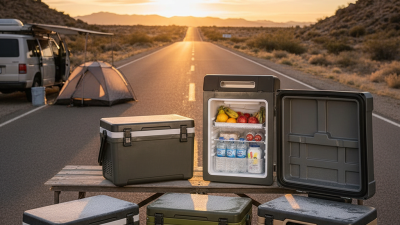
Choosing the best portable refrigerator for global buyers is not simply a matter of picking the largest model. A dependable unit must match climate, vehicle space, battery capacity, food volume, and travel habits. A family crossing hot deserts needs different performance from a photographer working in a cool mountain camp. Small details matter: thick insulation, a readable temperature display, strong handles, and a drain that does not leak inside the trunk.
According to portable refrigeration specialist Mark Sanders, “A portable refrigerator is only as reliable as the power system supporting it.” That practical warning deserves attention. A powerful compressor cannot compensate for weak wiring, an undersized battery, or poor ventilation. Buyers should examine cooling ranges, energy consumption, compressor reputation, voltage compatibility, warranty coverage, and service access in their destination country. Not every impressive specification tells the full story.
This 2026 guide compares leading portable refrigerator options for road trips, marine travel, outdoor work, emergency food storage, and international use. It considers single-zone and dual-zone designs, wheel and handle quality, solar compatibility, noise, and real-world temperature stability. Some conclusions remain imperfect. Manufacturer testing may not reflect tropical humidity, dusty roads, or repeated lid opening. User reviews can also be uneven. Still, careful comparison creates a safer starting point. The strongest choice is rarely the cheapest or biggest model. It is the one that keeps contents consistently cold, travels securely, and fits the buyer’s actual power and climate conditions.
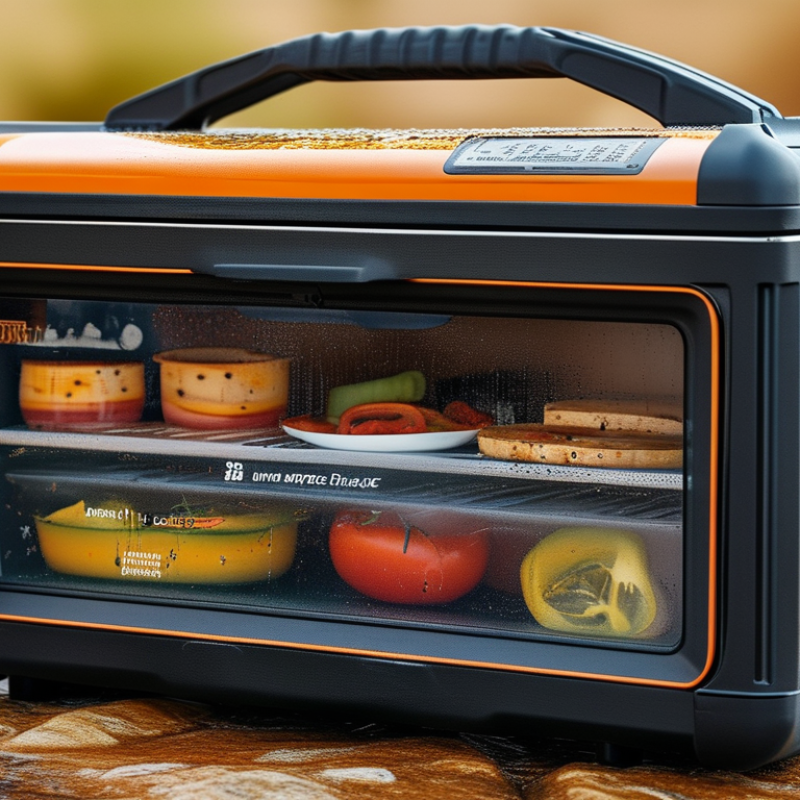
A portable refrigerator is an insulated, movable cooling box designed for vehicles, campsites, boats, and temporary work areas. Unlike a simple cooler, it actively lowers the internal temperature and maintains it with a thermostat. Many modern models use a compressor, similar to a household refrigerator, but with a compact sealed system.
The compressor circulates refrigerant through coils. Heat leaves the storage chamber and moves outside through a condenser. Cold air then returns inside, while insulation slows temperature changes. A digital sensor checks the interior temperature repeatedly. When the target is reached, the compressor pauses. It starts again as the temperature rises.
Power usually comes from a vehicle socket, rechargeable battery, or wall outlet. Check voltage compatibility before international travel. A 12-volt connection may appear universal, but socket quality and cable length still matter. Keep ventilation openings clear, especially in a hot vehicle. Direct sunlight can increase energy use sharply.
I once assumed thicker insulation solved every problem. It did not. Poor airflow around the unit caused warm corners and noisy operation. That detail matters. Buyers should test temperature stability with a thermometer, not trust the display alone. Food also needs careful packing, because an overfilled chamber blocks airflow. Ambient heat, battery condition, and frequent opening can change real performance. Small mistakes remain possible.
A portable refrigerator is an insulated, movable cooling appliance powered by direct current, alternating current, or both. Compressor models actively remove heat and can usually freeze food, while thermoelectric models transfer heat electronically and are mainly designed to keep items cool.
| Portable Refrigerator Type | Typical Capacity | Typical Temperature Range | Power Options | Typical Rated Power | Typical Empty Weight | How It Works | Best Use |
|---|---|---|---|---|---|---|---|
| Compact Thermoelectric Cooler | 4–10 L | Approximately 15–25 °C below ambient temperature; generally not suitable for freezing | 12 V DC; some units include a 100–240 V AC adapter | 35–60 W | 2–6 kg | A Peltier semiconductor module transfers heat from the insulated compartment to the outside air. | Short trips, medicines that do not require freezing, personal drinks, and small vehicles |
| Single-Zone Compressor Refrigerator | 15–25 L | Approximately −20 °C to +20 °C | 12/24 V DC; many versions support 100–240 V AC through an adapter | 40–60 W rated input; actual average use varies with ambient temperature and settings | 8–14 kg | A sealed vapor-compression system circulates refrigerant through a compressor, condenser, expansion device, and evaporator. | One or two people, road travel, camping, fishing, and frozen food storage |
| Medium Single-Zone Compressor Refrigerator | 30–45 L | Approximately −20 °C to +20 °C | 12/24 V DC; commonly compatible with 100–240 V AC adapters | 45–70 W rated input; average consumption depends on insulation, load, and climate | 12–20 kg | The compressor raises refrigerant pressure so heat can be released outside; the evaporator then absorbs heat inside the cabinet. | Family travel, weekend camping, vans, boats, and longer outdoor stays |
| Dual-Zone Compressor Refrigerator | 35–60 L | One compartment may operate as a refrigerator and the other as a freezer; commonly about −20 °C to +20 °C | 12/24 V DC; many models also accept 100–240 V AC through an adapter | 50–80 W rated input; simultaneous cooling can increase energy use | 18–30 kg | Two insulated compartments use separate temperature controls or a shared compressor with independent cooling management. | Large families, extended camping, international road trips, and mixed fresh-and-frozen storage |
| Large Dual-Zone or Chest-Style Refrigerator | 60–100 L | Approximately −20 °C to +10 °C, depending on compartment configuration | 12/24 V DC; AC operation usually requires a compatible adapter or built-in AC input | 60–100 W rated input; starting and peak loads may be higher | 25–40 kg | High-density insulation reduces heat gain while a compressor refrigeration circuit removes heat from one or more compartments. | Overlanding, marine use, mobile catering, remote work sites, and group travel |
| Portable Refrigerator with Built-In Battery | 20–50 L | Approximately −20 °C to +20 °C | 12/24 V DC, 100–240 V AC, and rechargeable battery operation; solar charging may be supported through a suitable input | 45–80 W rated input | 14–28 kg including battery | A compressor refrigerator is combined with a rechargeable lithium battery and a battery-management system. | Off-grid camping, emergency preparedness, outdoor events, and locations without continuous mains power |
| Vehicle-Integrated Portable Refrigerator | 40–90 L | Approximately −18 °C to +10 °C | 12/24 V DC vehicle circuit; optional AC adapter depending on configuration | 45–90 W rated input | 20–40 kg | A compressor cooling circuit operates from the vehicle electrical system and is designed for secure installation or tie-down. | Caravans, camper vans, trucks, boats, and long-distance commercial travel |
Note: The figures shown are typical market ranges for portable refrigeration products and are intended for comparison. Actual capacity, temperature, power draw, battery duration, dimensions, and performance vary by design, insulation, ambient temperature, ventilation, load, and power source. Compressor refrigerators normally provide more stable cooling and lower energy use than thermoelectric coolers, especially in hot climates.