Choosing the right Traffic Control Bollard in 2026 requires more than comparing prices or browsing product photos. A bollard should match the site’s traffic pattern, surface condition, impact risk, and maintenance capacity. A warehouse entrance may need a highly visible, fixed steel model. A hotel driveway may need a removable or retractable option for deliveries. The setting decides the specification.
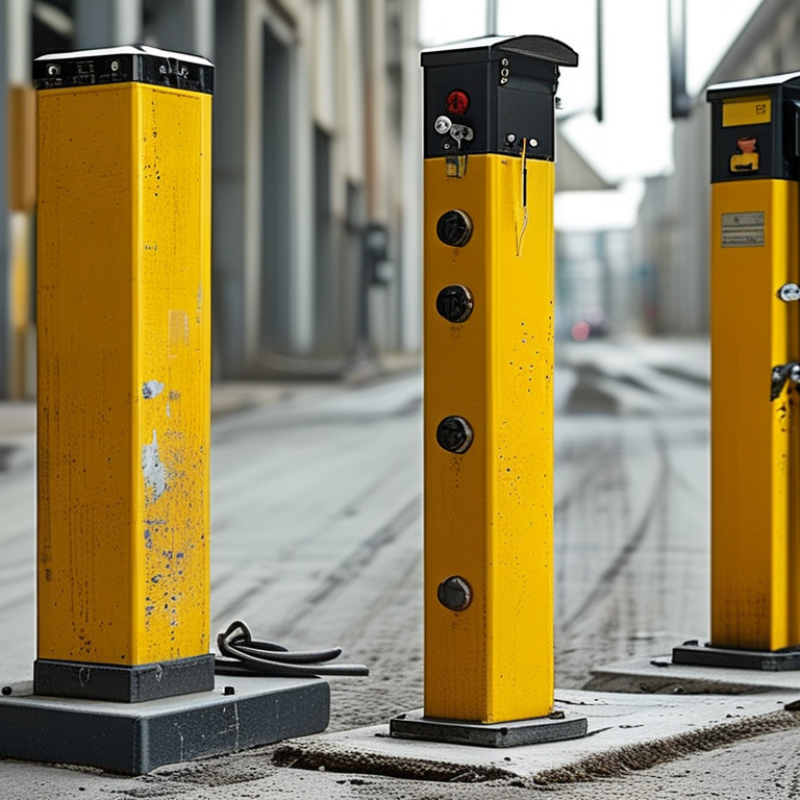
Small details matter. Measure the mounting area before ordering. Check whether the pavement is concrete, asphalt, or uneven paving. Review the bollard’s diameter, height, reflective bands, anchoring method, and tested impact performance. A yellow finish may improve daytime visibility, while reflective material helps during low-light conditions. Automatic models also require dependable power, drainage protection, and controlled access equipment. A beautiful installation can still become a costly problem if water enters the mechanism.
Practical experience should guide the final choice, but experience is not enough by itself. Request technical drawings, installation instructions, maintenance intervals, and verified test information from established manufacturers. Confirm that the product suits local safety requirements and the intended traffic environment. Avoid selecting a heavy-duty bollard simply because it appears stronger. Excessive resistance can damage vehicles, paving, or nearby structures. That risk is easy to miss.
Site conditions change.
A careful review should include emergency access, pedestrian visibility, cleaning routines, and replacement planning. Consider what happens after one unit is damaged. Can parts be sourced quickly? Can staff operate the system safely during a power failure? The best Traffic Control Bollard is not always the most advanced model. It is the one that performs reliably, remains visible, and fits the real demands of the site.
A bollard should match the vehicle threat, not merely the street appearance. ASTM F2656/F2656M measures impact performance using a 15,000-pound vehicle. Its P1–P4 ratings describe vehicle penetration after impact. P1 means penetration up to 1 metre. P2 covers over 1 to 7 metres. P3 covers over 7 to 30 metres. P4 exceeds 30 metres. The test speed also matters, such as M30, M40, or M50. A P1 result at M50 is not equal to P1 at M30.
K12 is an older rating under the U.S. Department of State SD-STD-02.01 Rev. A. It represents a 15,000-pound vehicle travelling at 50 mph, with penetration limited to 12 feet. Do not treat K12 and ASTM P-ratings as automatic equivalents. Their test structures and reporting methods differ. The GSA Facility Security Committee Site Security Design Guide recommends combining vehicle barriers with distance, access control, and site planning. That matters because one bollard cannot solve every approach angle. NHTSA’s Traffic Safety Facts 2022 recorded 42,514 U.S. roadway deaths, although this figure measures traffic safety, not hostile vehicle attacks. The distinction is easy to miss.
Tips: Request the complete crash-test certificate. Check vehicle weight, impact speed, penetration, foundation details, and spacing. Inspect the pavement too. A strong post in weak concrete is an uncomfortable contradiction. Also question your first assumption. The highest rating may create excessive cost, maintenance, and emergency-access problems.
Choosing the right traffic control bollard in 2026 starts with vehicle energy, not appearance. IWA 14-1 classes provide a practical reference for impact resistance. The format matters.
V/7200 50
represents a 7,200-kilogram vehicle traveling at 50 kilometers per hour. Its impact energy is roughly 694 kilojoules.
V/1500 30
represents a 1,500-kilogram vehicle at 30 kilometers per hour, producing about 52 kilojoules.
This difference is substantial. A lighter bollard may suit parking protection, while a stronger system may be required near entrances or crowded pedestrian routes.
Do not select a bollard from the rating alone. Check the tested foundation, bollard spacing, installation depth, soil condition, and impact angle. A certified result applies to a specific tested configuration.
Changing the base plate or reducing concrete depth can weaken performance. Site traffic data is often incomplete. That is a problem.
Review vehicle weights, approach speeds, turning paths, and stopping distances before specifying equipment. A small delivery van can create a different risk from a fully loaded truck. The classification helps, but it cannot replace a careful site assessment.
How to Choose the Right Traffic Control Bollard in 2026?
When selecting a traffic control bollard, protect the usable width of every accessible route. Keep at least 915 mm of clear passage between the closest obstacles. This measurement should include bollards, walls, signs, curbs, and temporary barriers. Do not measure only from bollard center to bollard center. A narrow gap can force wheelchair users into vehicle areas. That risk becomes greater near entrances, crossings, and loading zones.
Choose a bollard with a footprint that suits the site without reducing the required clearance. In busy areas, use high-contrast surfaces and reflective details that remain visible at night. Rounded edges may reduce snagging risks, but they do not replace proper spacing. Check whether a removable unit could be left in the route after maintenance. It happens. A clear plan may fail when equipment is returned carelessly.
Walk the route with a tape measure before installation. Test it with a wheelchair, mobility scooter, or a simple full-size access template. Measure at doorways, turns, slopes, and pinch points. A route can measure 915 mm at one end and become much tighter near a hinge or drain. Review local accessibility requirements before final approval, because regional rules may require greater width or additional maneuvering space. Recheck the route after installation, landscaping, resurfacing, and seasonal storage. Small changes matter.
The operation type should match your site, not just its appearance. Fixed bollards suit entrances needing permanent protection, such as warehouse doors or narrow pedestrian edges. They provide dependable resistance but can obstruct maintenance vehicles. Removable bollards offer flexibility. Staff can unlock and lift them when deliveries arrive. However, the socket may collect rainwater, grit, and ice. Poor drainage creates avoidable failures. Check the locking system regularly.
Automatic bollards support controlled vehicle access at busy gates, offices, and managed parking areas. They require power, sensors, and scheduled maintenance. A short outage can affect access, so plan a manual override. Retractable bollards disappear below ground when access is permitted. They preserve a cleaner driveway and reduce visual clutter. Yet, their underground housing needs careful drainage and inspection. Do not choose this option without reviewing soil conditions and service access. My field experience suggests that attractive installations sometimes hide expensive maintenance problems.
Tips: Measure vehicle paths during peak hours. Ask for tested impact and cycle data. Confirm visibility in rain, fog, and darkness. Select materials suited to local weather. Keep emergency access practical. A simple fixed design may outperform a complex automatic system when daily traffic is light. Consult a qualified installer and document inspections. Small details matter.
How to Choose the Right Traffic Control Bollard in 2026?
A bollard’s certificate is only the beginning. PAS 68 impact testing should identify vehicle type, speed, impact angle, foundation, and stopping distance. Ask for the complete test report, not a cropped certificate. PAS 68 evaluates a tested installation system, not every future site condition. A poor foundation can change the result. The World Health Organization’s Global Status Report on Road Safety 2023 estimates 1.19 million annual road deaths worldwide. That figure makes dependable protection more than a procurement detail. It becomes a design responsibility.
Visibility needs daylight and darkness. Use high-contrast finishes, retroreflective bands, and suitable lighting near crossings or entrances. Check viewing angles from approaching vehicles. Drainage also matters. Water trapped around the sleeve can accelerate corrosion, freeze, and loosen the foundation. Provide clear outlets and avoid placing bollards in low spots. The UK Department for Transport recorded 1,624 road deaths in Great Britain during 2023. Small installation errors still carry serious consequences.
Tips: Photograph the foundation before backfilling. Record torque values, spacing, and inspection dates. Walk the site after heavy rain. Check loose fixings, damaged reflective material, blocked drainage, and new sightline obstructions. Maintenance schedules should follow traffic exposure, weather, and impact history. Annual checks may be too slow for busy sites. That assumption deserves review.
| Verification Dimension | What to Check | Recommended Evidence or Measurement | Practical Acceptance Guidance | Risk if Not Verified |
|---|---|---|---|---|
| PAS 68 impact testing | Confirm that the complete bollard and foundation arrangement has been tested as a vehicle security barrier, rather than relying only on a material or component claim. | Obtain an independent test report identifying the tested bollard, foundation, installation arrangement, vehicle type, vehicle mass, impact speed, impact angle, and penetration result. | The proposed installation should match the tested configuration, including embedment depth, foundation dimensions, reinforcement, spacing, and surrounding ground conditions. | A barrier may perform differently on site if its foundation, spacing, or installation method differs from the tested arrangement. |
| PAS 68 classification suitability | Match the test classification to the vehicle threat, approach speed, access route, and required stopping or penetration performance. | Record the classification details from the test report. PAS 68 classifications describe test conditions and performance; they are not a universal “安全等级” or a substitute for site risk assessment. | Select a classification based on a documented vehicle-threat assessment, not solely on the highest available rating. | Over-specification increases cost and foundation requirements, while under-specification may leave the access point vulnerable. |
| Foundation and ground conditions | Verify excavation depth, concrete strength, reinforcement, edge distances, utilities, soil condition, and the distance from nearby structures. | Use approved construction drawings, installation records, concrete delivery records, photographs, and as-built measurements. | The installed foundation must be consistent with the tested or engineered design. Obtain structural review where soil, utilities, slopes, or existing slabs create uncertainty. | Insufficient anchorage or unsuitable ground can reduce impact resistance and cause settlement, cracking, or misalignment. |
| Visibility in daylight | Check whether the bollard is clearly visible to drivers, cyclists, pedestrians, and people with reduced vision during the approach movement. | Review contrast against the background, surface finish, lighting conditions, sign placement, and visibility from the actual approach paths. | Use a visually contrasting finish or contrasting band where required by the project accessibility and highway design criteria. Avoid colors that blend into paving, walls, or landscaping. | Poor contrast can increase collision, trip, and accessibility risks, especially at entrances with changing backgrounds. |
| Night-time visibility | Assess visibility under vehicle headlights, site lighting, rain, glare, and partial shadow. | Confirm the use, position, and durability of retroreflective material or dedicated lighting. Check visibility from the stopping distance and turning path. | Retroreflective elements should remain clean, securely attached, and unobstructed. Coordinate any electrical lighting with the site lighting and maintenance plan. | Drivers may fail to detect the bollard in time, increasing impact damage and potential injury. |
| Spacing and pedestrian movement | Verify clear passage, wheelchair access, cycle movement, vehicle tracking, emergency access, and the risk of trapping or climbing between bollards. | Measure clear gaps on the finished installation and compare them with the applicable local accessibility, fire, highway, and security requirements. | Do not use a generic spacing value without checking the governing project standards. The gap must satisfy both the security function and the required pedestrian route. | Incorrect spacing can block accessible routes, permit unauthorized vehicle passage, or create entrapment hazards. |
| Drainage and water management | Check whether water can drain away from the bollard, sleeve, foundation, hinges, locks, and electrical components. | Inspect finished levels, paving falls, drainage outlets, permeable layers, waterproofing, and any connection to surface-water drainage. Carry out a water test where appropriate. | The design should prevent persistent standing water and direct runoff away from moving or electrical parts. Drainage details must be suitable for local rainfall, frost, and soil conditions. | Water accumulation can cause corrosion, freezing, electrical faults, settlement, blocked sleeves, and premature failure. |
| Corrosion and material durability | Consider exposure to road salt, coastal air, chemicals, standing water, abrasion, and cleaning products. | Verify the material grade, protective coating system, coating repair procedure, fastener compatibility, and environmental exposure category used for design. | Specify a corrosion-protection system appropriate to the site environment and ensure damaged coatings are repaired according to the approved procedure. | Corrosion can reduce section strength, seize moving parts, damage finishes, and increase lifecycle costs. |
| Fixed, removable, or automatic operation | Select the operating type according to access frequency, security requirements, emergency procedures, available power, and maintenance capability. | Review cycle testing, manual override, fail-safe or fail-secure behavior, emergency release, control-system interfaces, and safety documentation. | The operating mode must be compatible with the site’s emergency plan and local safety requirements. Automatic systems need documented detection and control arrangements. | The bollard may obstruct emergency access, remain open during a security event, or move unexpectedly. |
| Routine inspection | Look for impact damage, loose fixings, cracks, corrosion, faded markings, blocked drainage, abnormal movement, and damaged reflective surfaces. | Create a dated inspection checklist with photographs and defect categories. Increase frequency in high-traffic, coastal, icy, or vandal-prone locations. | A practical baseline is visual inspection at least monthly, with additional checks after any vehicle impact or severe weather; the project risk assessment should set the final interval. | Small defects may develop into structural, operational, or safety failures if not recorded and corrected. |
| Preventive maintenance | Confirm cleaning, lubrication where permitted, drainage clearance, coating repair, electrical checks, and replacement of wear components. | Use the installation and maintenance instructions, record completed work, and retain replacement-part specifications and inspection results. | Schedule maintenance according to operating cycles and environmental exposure, with a formal detailed review at least annually for critical installations. | Unplanned downtime, seized mechanisms, unreliable access control, and higher repair costs may result. |
| Post-impact procedure | Determine how the bollard, foundation, paving, adjacent barriers, and control equipment will be isolated and assessed after a collision. | Keep an incident form, photographs, temporary protection plan, structural inspection requirement, and criteria for repair or replacement. | Do not return an impact-damaged security bollard to service solely because it still moves or appears visually intact. | Hidden deformation or foundation damage may compromise future impact performance and public safety. |
| Documentation and handover | Confirm that the owner receives all information needed to operate, inspect, repair, and modify the installation safely. | Provide the test report, design drawings, as-built records, installation checklist, maintenance schedule, risk assessments, emergency contacts, and spare-parts information. | Handover should be complete before public operation, with responsibilities, inspection frequencies, and defect escalation routes clearly assigned. | Missing records make compliance verification, fault diagnosis, future alterations, and insurance or incident investigations more difficult. |
Stay in touch with the latest National Luna Products and News!